


Spirit Island
3.8152.00 Reviews
App Specs
- Version
- 3.3.3
- Updated On
- License
- Free
- Downloads
- 100,000+
- Developer
- Handelabra Games
- Categories
- Board
- Platform
- Android
Screenshots
 Analysis by AppCompare
I find Spirit Island works best as a shared activity for people who enjoy talking through a complicated problem rather than racing to finish a quick round. Its digital format makes it easier to bring the strategy game to a household table or pass a device around, but it still asks everyone to follow a lot of moving pieces. I’d choose it for a quiet evening when we have time to plan, not for a short break between other tasks.
A shared game that rewards a proper sit-down
The appeal in a household setting is that players can tackle the same threat together instead of competing for a winner’s spot. That changes the mood: you can discuss what to do, compare possible moves, and learn from a bad turn as a group. For people who prefer cooperative puzzles to direct rivalry, that can make the game a welcome alternative to familiar competitive board games.
A realistic way to use it is to set aside an evening, choose a spirit, and treat the first session as a learning run rather than a test of skill. The group can pause to inspect the situation and talk through priorities before committing to cards. That slower approach suits Spirit Island far better than trying to squeeze in a hurried round while everyone is distracted.
Device sharing and personal boundaries
If you share a phone or tablet, agree on who is handling the device and who is making decisions before starting. The game’s cooperative nature makes passing control between players feel natural, but a shared screen can still make it easy for one person to take over. I’d give everyone a chance to read the board and explain their plan, especially when someone is still learning.
There is also a practical distinction between sharing a device and sharing a personal account. I would check which store account is being used before making any optional purchase, and avoid assuming that progress or purchases will be separate for each household member. That’s a sensible boundary for any shared app, particularly when more than one person can access the device.
Coordination matters more than fast reactions here. Players should agree on a broad priority, such as which developing threat needs attention first, while leaving room for each spirit’s own plan. A useful habit is to describe the intended effect of a card before playing it; this helps the group spot overlap or a gap in its response. It also turns the game into a conversation rather than one person silently making every choice.
Who will enjoy it, and who may not
I’d recommend this to board-game fans who like layered decisions, cooperative planning, and games that reward repeated practice. It can also suit a solo player who wants to think through several interacting pieces without needing a group around. On the other hand, families looking for a simple, low-explanation game for a mixed-age gathering may be happier with a lighter board game. The Everyone age rating describes the content category, not how easy the rules or decisions are for a child to follow.
Worth Reading Before You Choose

EA SPORTS FC Mobile 26 Is a Bigger Football Game, but It Takes Time

Flipboard Shows What News Apps Must Do Beyond the Feed

Switching to Android Auto Means Rethinking Your Driving Routine

Google Calendar Makes a Crowded Week Easier to Manage

Ludo King Makes the Most of the Minutes Between Plans

Baby Panda World Brings Quick Play to Modern Phones, but Its Game Library Feels Busy
At home, I would introduce it gradually: let a new player focus on understanding their spirit and the immediate board state instead of expecting them to absorb every rule at once. Experienced players can explain why a move matters without dictating the answer. That approach keeps the session welcoming while respecting that the game’s strategic density can be demanding even for adults who do not regularly play board games.
What the digital format changes
Compared with a physical strategy board game, the app avoids the need to lay out and manually manage every piece, which is useful when table space is limited or nobody wants to handle all the bookkeeping. In exchange, players need to be comfortable reading a busy screen and interacting through the device rather than moving physical components. If your group values tactile pieces and face-to-face table presence above convenience, the physical format may be a better fit.
For a first session, I’d resist trying to optimize every move. First identify what is most urgent, then check which available powers can address it and whether the group is relying on the same solution. That small pause can make the number of choices feel more manageable. It also helps expose a key trade-off: spending effort on an immediate problem may leave less room for the longer-term growth that makes later turns stronger.
Welcome to the Island
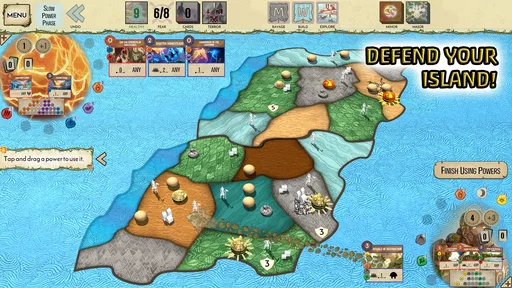
In Spirit Island, you’re not just playing a game; you’re stepping into a world where you embody a spirit trying to defend an island from colonizing invaders. Sounds cool, right? You get to pick from various spirits, each with unique abilities and elements they control. Whether it’s raging fires, rushing rivers, or whispering winds, each spirit brings something unique to the table.
The invaders are relentless, and they’re not just going to sit back and let you win. They’re building towns, blighting the land, and spreading like a bad case of the Mondays. Your job? Work with other spirits (or go solo if you’re feeling brave) to push them back into the sea.
The Mechanics
The game mechanics are where the digital Spirit Island really shines. It’s a cooperative game, so you’re not going head-to-head with your friends. Instead, you’re planning and strategizing together, which is a refreshing change from the usual competitive fare.
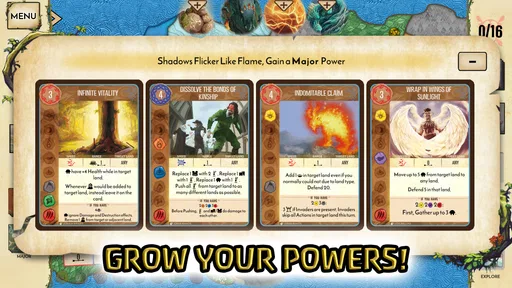
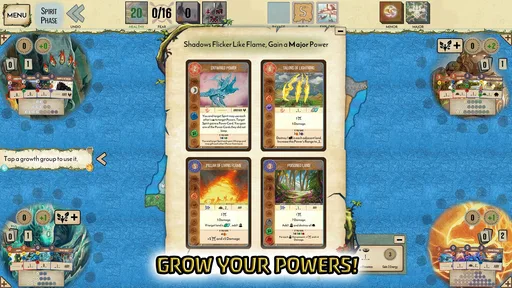
Each turn, you’ll be selecting and playing power cards, which are your main tools for dealing with the invaders. You’ll also be managing your energy, which is what you’ll use to play these cards, and growing your spirit’s presence on the island to gain more power. The decisions are never easy, and sometimes it feels like you’re constantly putting out fires (sometimes literally).
Learning the rhythm without burning out
Because several kinds of information compete for your attention, I would learn the turn rhythm before worrying about clever combinations. Check the island’s situation, decide which threat deserves immediate attention, and then compare the cards your spirit can afford with what the group needs. It is a practical way to reduce analysis paralysis: you are not trying to solve the entire island at once, only to make a useful choice in the current position.
One subtle group challenge is that a move can look powerful on its own but be less useful if another player is already handling the same problem. Talking through intended effects before cards are played can prevent duplicated effort and reveal uncovered areas. The trade-off is that discussion can stretch a session, especially when experienced players debate several viable plans. I enjoy that deliberation, but anyone wanting a brisk, low-conversation game may not.
Playing alone changes the feel rather than removing the challenge. You have no group to coordinate with, so you can take time to consider the board without negotiating each decision. That makes solo play a sensible option when schedules do not line up, though it loses the shared discovery that makes cooperative play distinctive. I would choose solo when I want to practice a spirit’s approach, and a group session when the conversation is part of the fun.
Strategy and Complexity
Now, if you’re new to strategic board games, I’ll be honest, there’s a bit of a learning curve. Spirit Island isn’t the kind of game you can just pick up and play without some serious thought. But that’s what makes it so rewarding. Every decision matters, and the satisfaction of executing a well-laid plan is second to none.
One of the things I love most is the replayability. With different spirits to choose from and various difficulty settings, no two games are the same. You can spend hours mastering one spirit, only to switch to another and feel like you’re learning the game all over again.
Choosing a starting point and making the most of a session
When a game offers several distinct spirits, I find it tempting to choose based on theme alone. For a first attempt, though, it is more useful to pick one whose style seems understandable and stay with it long enough to recognize what its abilities are trying to accomplish. Switching immediately after a confusing session can make it hard to tell whether the difficulty came from the rules, the spirit, or a particular board situation.
Replay value here comes with a real commitment: variety gives you reasons to return, but it also means mastery is gradual. I would not treat a difficult first outing as proof that the game is not for me. At the same time, if I mainly want a quick, familiar routine, the changing strategic demands may feel like homework rather than a benefit. This is a game for players who enjoy learning through repeated decisions.
The app is free to install, with optional in-app purchases listed from $2.99 to $24.99 per item. I would start with the free experience and decide whether I want to spend only after I know the core style suits me. That is especially sensible on a household device: whoever controls the store account should make purchase decisions, rather than treating an in-game option as an automatic part of a shared session.
Graphics and Design
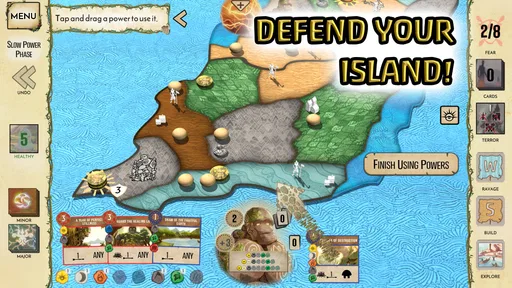
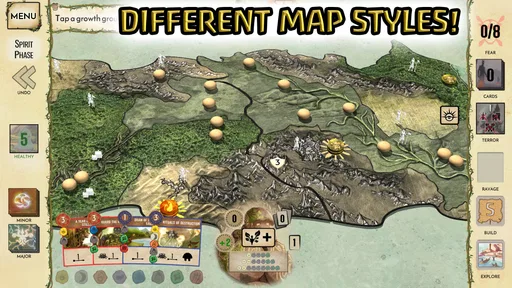
The app version of Spirit Island does a fantastic job of capturing the essence of the board game. The graphics are crisp, and the interface is intuitive. It’s easy to navigate, and all the information you need is at your fingertips. Plus, the animations add a nice touch of flair without getting in the way of the gameplay.
That being said, because it’s based on a board game, there’s a lot of information to take in. The app does a good job of easing you into it, but if you’re someone who likes things simple and straightforward, this might be a bit overwhelming at first.
Reading the screen and sharing decisions
On a small phone screen, the amount of board information can make a thoughtful turn feel more like close reading than casual tapping. I would use a larger screen when one is available for a group session, since several people need to inspect the same state and follow the discussion. A phone remains convenient for solo play or a quick check, but convenience should not be confused with effortless readability.
When the table is sharing one device, it helps to appoint a temporary “driver” who handles the controls while everyone else contributes. Rotate that role between sessions, not necessarily during every move; constant handoffs can interrupt concentration. This is not a special family mode, just a simple way to keep control fair and ensure the person with the device does not become the only person playing.
Handelabra Games developed this board game adaptation. It is free to install and carries an Everyone content rating, but that should not be read as a promise that it is an easy family game. The strategic demands are the more important consideration when choosing who joins. I’d explain the cooperative goal and the amount of planning involved before inviting younger or less experienced players, so nobody feels surprised by the mental load.
The Android release is listed as version 3.1.1 and requires Android 7.0 or later. It has a 3.7 average from around 1,000 ratings, with more than 50,000 installs. Those figures suggest a meaningful audience, though they cannot tell me whether a particular household will enjoy its pace or complexity. I’d base that decision on whether the group likes deliberate cooperative strategy, not on popularity alone.
Final Thoughts
Overall, Spirit Island is a must-try for anyone who loves strategic and cooperative games. It’s challenging, engaging, and incredibly satisfying when you finally manage to fend off the invaders. Sure, it’s complex, but that complexity is what keeps you coming back for more.
If you’re ready to step into the shoes of a powerful spirit and save your island, you can find the app on both Android and iOS. Just be prepared to lose track of time, because once you start playing, it’s hard to stop. So, gather your friends, plan your strategy, and get ready to dive into one of the most rewarding board game experiences out there.
My household verdict
For a household that already enjoys weighty board games, I think this is a strong shared-device option when everyone is willing to talk, read carefully, and accept that a session needs room to breathe. Its cooperative focus is a genuine point of difference from the usual board-game apps built around quick turns or direct competition. The digital format is appealing when setup and physical table space are obstacles, while a boxed game is still preferable for players who want components to handle and a screen-free evening.
I would skip it for a family gathering where people want to join and leave casually, for young players who need very simple rules, or for anyone who dislikes pausing to consider several consequences. The Everyone rating is useful context for content, but it does not remove the need to judge the complexity for each player. If your group values patience and shared problem-solving, the challenge can become the evening’s main attraction rather than a barrier.
My practical recommendation is to try a low-pressure session, keep the group small enough that everyone can follow the discussion, and resist turning the first game into a performance test. Make purchase choices deliberately if the device is shared, and agree who is controlling the screen before play begins. That combination gives the game its best chance to work as intended: not as a quick distraction, but as a thoughtful cooperative activity that gives players something meaningful to discuss after the session ends.
Pros
- Engaging cooperative gameplay mechanics.
- Deep strategic components and replay value.
- Beautifully designed artwork and interface.
- Variety of spirits with unique abilities.
- Challenging levels for seasoned players.
Cons
- Steep learning curve for new players.
- Limited in-game tutorials and guides.
- Occasional performance issues on older devices.
- Can be time-consuming to complete sessions.
- Requires internet connection for updates.
FAQs for Spirit Island
What is the main objective of Spirit Island?
Spirit Island is a cooperative strategy game where players take on the roles of powerful spirits defending their island from colonizing invaders. The primary objective is to protect the island and its native inhabitants, the Dahan, by using unique spirit powers and abilities to drive away the invaders before they cause irreversible harm.
How many players can participate in Spirit Island?
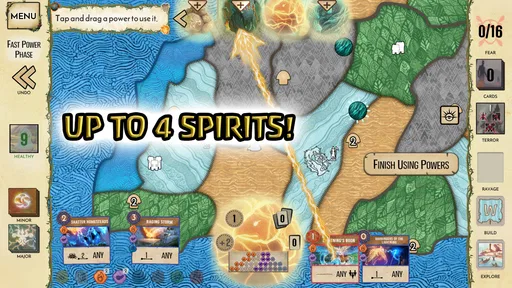
Spirit Island can be played by 1 to 4 players, making it a versatile choice for both solo and group gameplay. Each player controls a different spirit, and teamwork is crucial as you strategize together to fend off the invading forces. The game scales well, adjusting difficulty based on the number of players.
Is Spirit Island suitable for beginners?
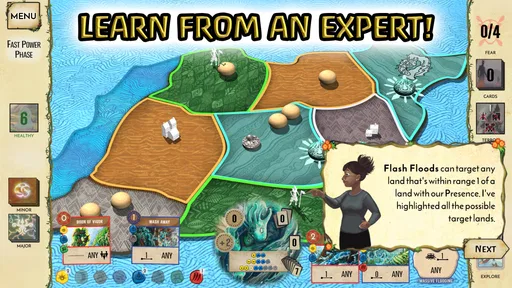
While Spirit Island offers deep strategic gameplay, it might be challenging for beginners due to its complex mechanics. However, the game includes a detailed rulebook and tutorials that can help new players learn the ropes. Patience and practice are key, and once familiar, the game becomes highly rewarding.
What platforms is Spirit Island available on?
Spirit Island is available on both Android and iOS platforms, allowing users to enjoy the game on their mobile devices. The app provides a digital adaptation of the board game, maintaining the essence of the original while offering convenience and accessibility for gaming on the go.
Are there any in-app purchases or expansions in Spirit Island?
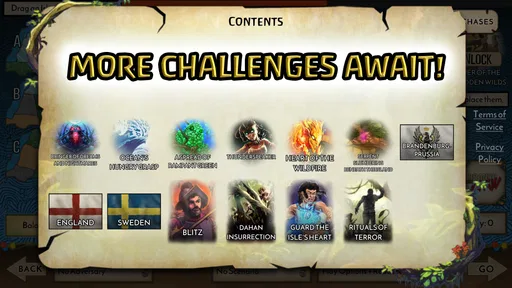
Yes, Spirit Island offers in-app purchases that include various expansions. These expansions introduce new spirits, scenarios, and adversaries, enhancing the game's replayability and depth. While the base game offers substantial content, expansions can provide additional challenges and variety for dedicated players.


